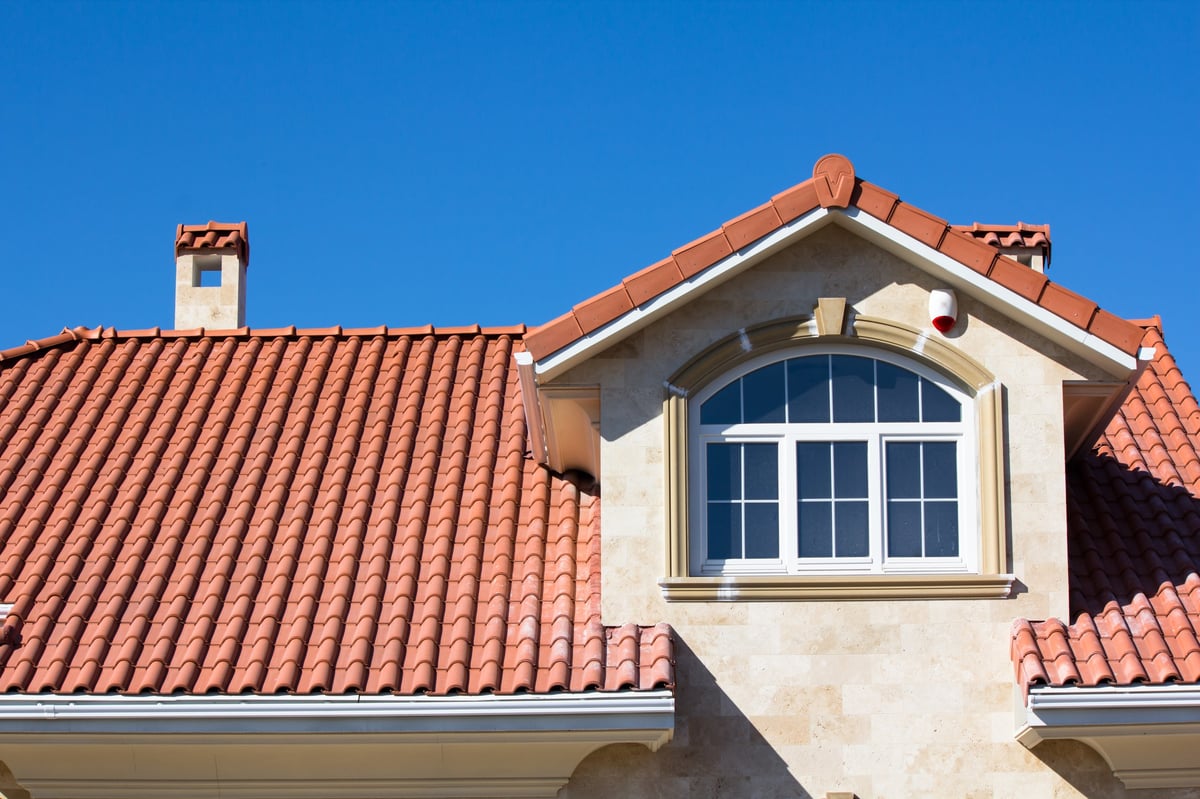
Arizona's climate is hard on the waterproof layer beneath your tile. Monument Roofing is a residential Arizona roofing company specializing in tile roof underlayment replacement — we lift and reset your existing tile, install a new high-performance underlayment system, and give your roof decades of renewed protection without replacing the tile itself. Serving Chandler, Gilbert, Scottsdale, and the surrounding Valley.
Concrete and clay roof tiles can last 50 years or more in Arizona. That's part of why so many homes in Chandler, Gilbert, and Scottsdale were built with tile roofs — they're a long-lasting, attractive roofing material suited to the desert.
But the tile is only one part of a tile roof system. Beneath every tile is a waterproof membrane called underlayment. This is the layer that actually keeps water out of your home. In Arizona's climate — 300+ days of sun, summer temperatures above 110°, dramatic temperature swings, and seasonal monsoon storms — underlayment takes a beating.
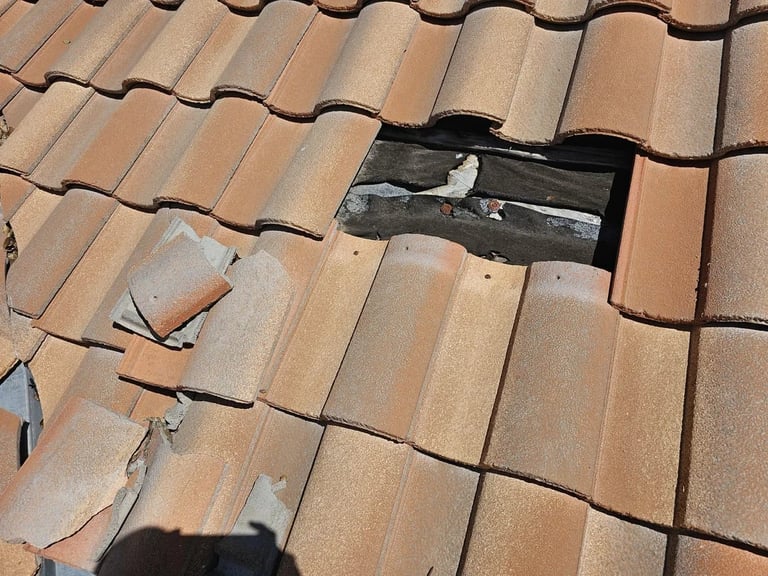
Over 15 to 25 years, the underlayment on an Arizona tile roof can dry out, become brittle, tear at fastener points, and lose its ability to keep water out. The tile above it can still look fine from the ground. The underlayment underneath may already be compromised.
Underlayment replacement is the process of lifting every tile, removing the failed underlayment and battens, inspecting and repairing the decking as needed, installing a new underlayment system, and resetting your original tile. It addresses the real problem — the waterproofing layer — without unnecessarily replacing tile that still has decades of life left.
Underlayment failure doesn't always announce itself with a visible leak. But there are signs that Arizona homeowners should watch for — especially if your roof is 15 years or older.
Water stains on ceilings, walls, or in attic spaces after rain. Even small, intermittent stains can indicate underlayment has been compromised.
Leaks that keep returning in the same area — especially around roof valleys, pipe jacks, or chimneys — often point to underlayment failure rather than just a tile issue.
If your tile roof is 15–25 years old and still has its original underlayment, it's approaching the end of its service life in Arizona conditions — even if the tile still looks acceptable.
When we lift some tiles and find underlayment that tears easily, has lost its flexibility, or shows visible cracking and granule loss, it's a clear sign the waterproofing layer is failing.
If your roof has been patched multiple times over the years, the underlayment system as a whole may be reaching the point where targeted repairs are no longer the best approach.
Here's what happens when we replace the underlayment on an Arizona residential tile roof — step by step.
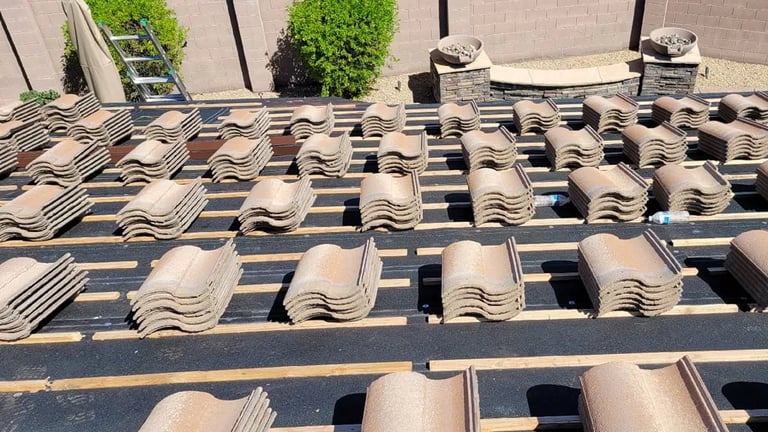
Every tile is carefully lifted, numbered, and staged on the roof or ground so it goes back in its exact original position. This step is methodical — we track where each tile belongs.
The old, deteriorated underlayment and battens are stripped off, exposing the wood deck beneath. Failed fasteners and old flashing components are removed.
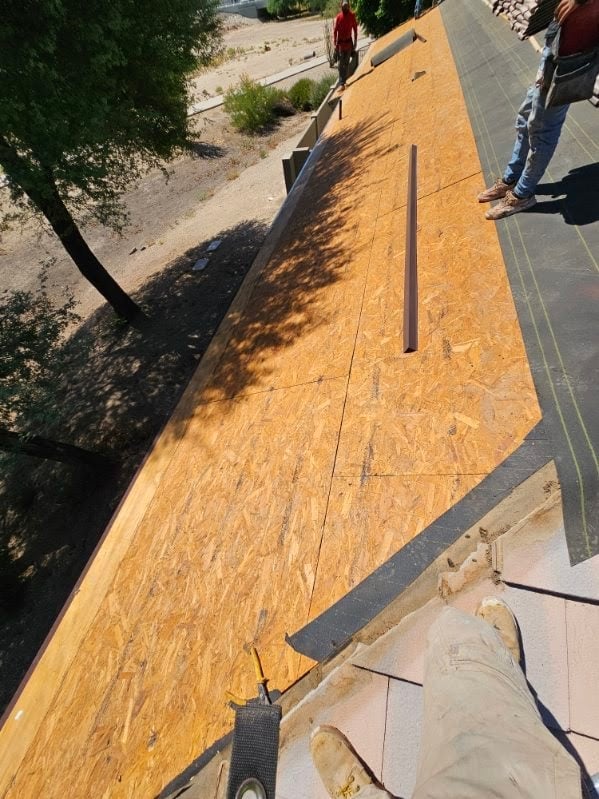
With the deck exposed, we inspect every section. Any areas with water damage, rot, or deterioration are cut out and replaced with new plywood or OSB decking before the new underlayment goes down.
The new underlayment system is installed — either 40 lb underlayment with new wood battens, or a self-adhered high-temperature peel-and-stick underlayment, depending on which system you choose.
New battens are installed, and each tile is reset in its numbered position. Any broken or damaged tiles discovered during the process are replaced with matching profiles and colors. The result is the same roof profile you've always had — with a new waterproofing system beneath it.
A proven, straightforward system that uses high-quality 40 lb underlayment and new wood battens. This is a durable system that performs well on Arizona homes and provides reliable waterproofing for years to come.
The standard system is appropriate for many Arizona homes. It provides a substantial upgrade over aged original underlayment and has been used successfully on residential tile roofs throughout the Valley for decades. Standard system jobs typically range from around $12,000–$18,000 depending on roof size, pitch, and decking condition. Every project starts with an inspection so we can give you an accurate number based on your specific roof.
The premium option uses Tri-Built self-adhered high-temperature peel-and-stick underlayment — a material engineered for extreme conditions — and includes replacement of critical penetration and flashing components. This system offers the longest-lasting protection and carries a 50-year manufacturer warranty on the underlayment material.
50-Year Manufacturer Warranty on Underlayment Material
The self-adhered underlayment seals around fastener penetrations, reducing potential leak paths. Material warranty covers the underlayment for 50 years.
The premium system costs more than the standard system due to the upgraded materials and additional flashing work. It's often the right choice for homeowners who plan to stay in their home long-term and want the longest-lasting protection available. Every project starts with an inspection so we can discuss both options and help you decide which makes sense for your home and budget.
Both systems are solid, proven approaches to underlayment replacement on Arizona residential roofs. The right choice depends on a few factors specific to your home and situation.
These are not hard rules. The best way to know which system makes sense for your roof is a professional inspection where we can look at your roof's specific condition, layout, and any challenges that might affect the scope of work. We'll walk you through both options, answer your questions, and let you decide — no pressure either way.
Yes — in nearly every case. This is one of the most common questions we hear, and it's an important one. Concrete and clay roof tiles can last 50 years or more. If your tile is still in serviceable condition, there's no reason to discard it.
During the underlayment replacement process, we lift every tile and number it so it returns to its exact original position. The tile is staged safely on the roof or on the ground while we replace the underlayment, battens, and any damaged decking.
Once the new underlayment and battens are in place, each tile is reset in its numbered spot. Any broken or damaged tiles discovered during the process — and there are usually a few on any roof — are replaced with tiles that match the profile and color of your existing roof. The goal is that the finished roof looks like the roof you've always had — because it largely is. The tile profile, color, and appearance remain the same. What's changed is the waterproofing beneath it.
If we find during the inspection that a significant percentage of your tile is damaged or failing, we'll let you know before we begin. But in our experience, Arizona tile roofs typically have tile that far outlasts the underlayment beneath it.
The roof deck is the structural wood layer — usually plywood or OSB — that sits beneath the underlayment. When underlayment fails over time, water can reach the deck and cause rot, warping, or deterioration in localized areas.
Deck inspection is a standard part of our process. Once we've removed the tile and the old underlayment, the deck is fully exposed. We inspect every section. Any areas with water damage, rot, or structural compromise are cut out and replaced with new decking material before the new underlayment goes down.
We will not install new underlayment over compromised decking. It wouldn't be right, and it wouldn't last. The deck needs to be solid for the underlayment to perform as designed.
The extent of decking repair varies from roof to roof. Some roofs need no decking repair at all. Others have a few isolated areas around old leaks or valleys that need attention. In more advanced cases, larger sections may need to be replaced. We'll show you what we find with photos and discuss any decking work before we proceed — no surprises.
Photo-Documented Throughout
We take photos of the decking at every stage — before, during, and after repair — so you can see exactly what was found and what was done.
We focus exclusively on residential tile roofs. Underlayment replacement is our primary service — not a side offering we do occasionally.
We work on Arizona roofs every day. We understand how the climate affects underlayment, what to look for during inspections, and what it takes to install a system that holds up in desert conditions.
You'll get a detailed scope of work that spells out exactly what's included — from tile removal through final cleanup. No vague line items. No surprises.
Every project starts with a detailed inspection. We lift tiles, check underlayment condition, and document what we find with photos. You'll know exactly what your roof needs before any work begins.
If your roof needs full underlayment replacement, we'll tell you. If a section repair is enough, we'll tell you that too. Our recommendations are based on what we see on your roof — not on what makes us the most money.
Not every roof needs full underlayment replacement. We help you understand when a targeted repair is appropriate and when full replacement makes more financial sense over the long term.
We're based in the East Valley and serve homeowners throughout the region. If you're in Chandler, Gilbert, or Scottsdale, we're close by and can typically have someone out quickly for an inspection.
Tile roof underlayment replacement and inspection for Chandler homeowners.
Underlayment replacement and tile roof services throughout Gilbert.
Premium underlayment systems and tile roof care for Scottsdale residences.
Also Serving the Broader Valley
Not sure if we cover your area? Call us at (480) 442-5695 — if we can help, we will.
Whether it's full underlayment replacement or a targeted section repair, the only way to know for sure is a professional inspection. We'll get on your roof, take photos, and give you honest recommendations — no pressure, no upselling.
Chandler · Gilbert · Scottsdale · and the surrounding Valley