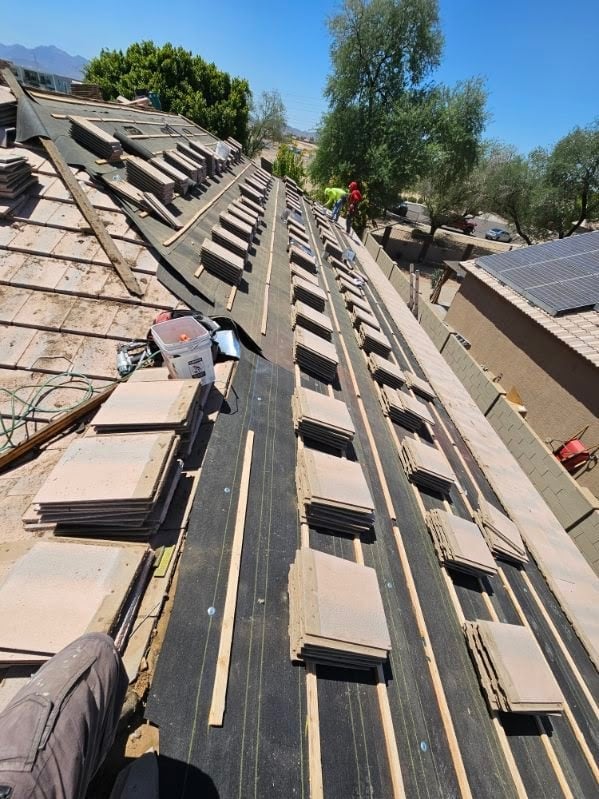
Not every leak means you need a full reroof. But not every leak should be handled with a quick patch, either. Monument Roofing is a residential Arizona roofing company providing leak diagnosis and corrective tile roof repairs — we remove tile in the affected area, replace failed underlayment and battens, inspect the decking, and rebuild the section properly. Serving Chandler, Gilbert, Scottsdale, and the surrounding Valley.
When water shows up where it shouldn't, you want it fixed — fast. We understand that. But the way a tile roof leak is repaired matters enormously. A tube of caulk or a quick patch might stop water for a season. It won't fix the underlying problem, and it won't prevent the same leak from coming back next monsoon.
At Monument Roofing, we take a different approach. We start with a thorough inspection to find exactly where the water is getting in and what's failed. If the problem is limited to a specific section of the roof — and the rest of the underlayment still has life left — we perform a section replacement repair. We remove tile in the affected area, cut out the failed underlayment and battens, inspect the decking, and rebuild that section correctly.
If the inspection reveals broader underlayment failure — meaning the waterproofing is compromised across large portions of the roof — we'll recommend full underlayment replacement instead. Not because it makes us more money. Because repairing one section on a roof where the underlayment is failing everywhere is like patching one hole in a worn-out tarp.
Either way, you get an honest recommendation based on what's actually happening on your roof. Not a sales pitch.
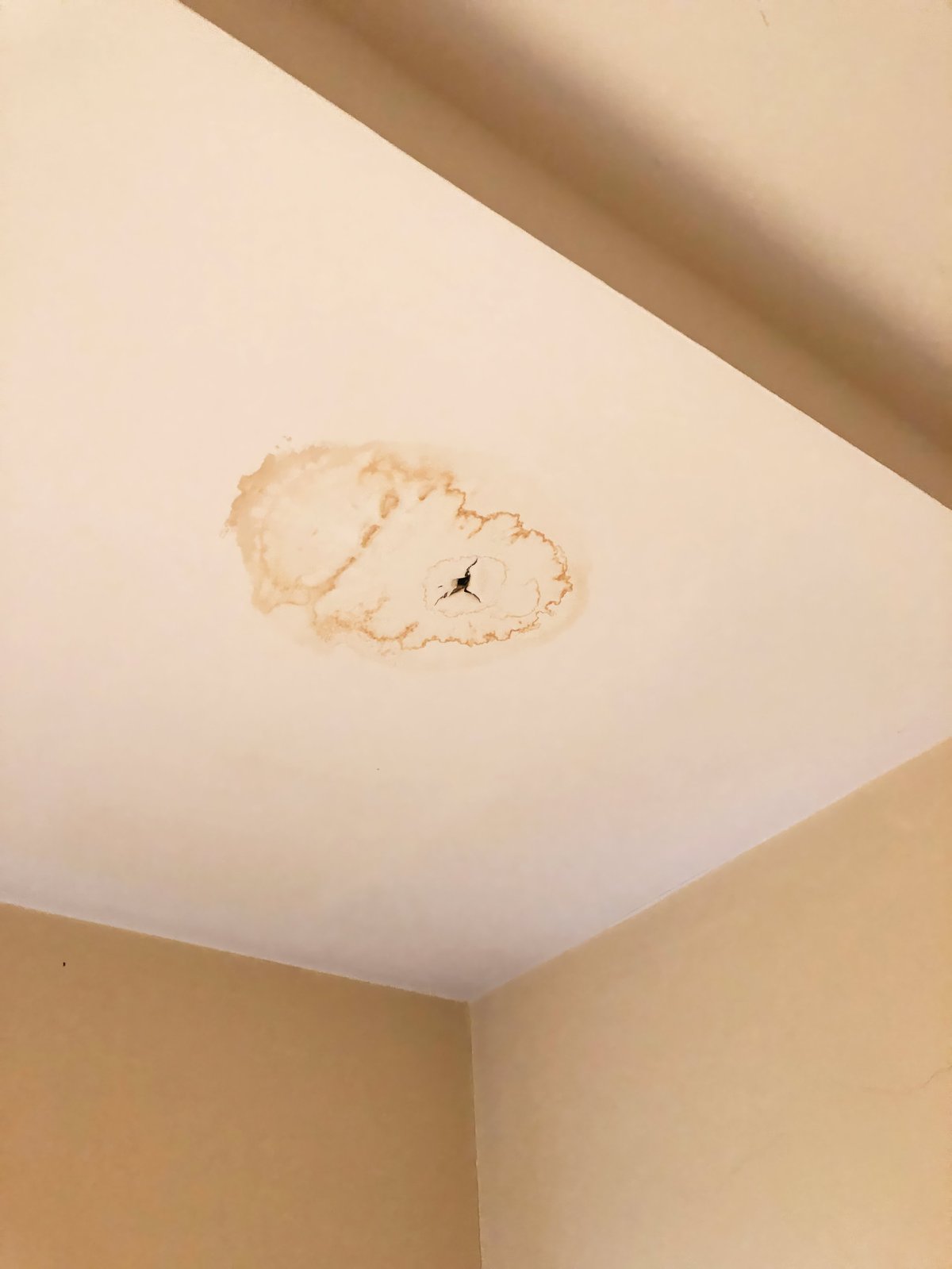
Tile roof leaks in Arizona typically aren't caused by the tile itself. They start beneath the tile — in the underlayment, around penetrations, or at transitions where different roof sections meet.
The most common cause. Over time, Arizona's heat and UV exposure dry out the underlayment, causing it to tear, crack, or lose waterproofing — especially at fastener points.
Sometimes underlayment fails in a specific area — a sun-baked south-facing slope, a valley, or around a penetration — while the rest of the roof is still in acceptable condition.
Pipe jacks, chimney flashing, roof valleys, and wall-to-roof transitions are natural weak points. Flashing can separate, and underlayment at these transitions often fails first.
A few cracked tiles aren't usually the main problem — tile is a shield, not the waterproof layer. But broken tiles combined with underlayment that's already degrading create a direct path for water.
Monsoon storms deliver intense, wind-driven rain that exploits every weak point in an aging underlayment system. Leaks that seem to appear suddenly after a storm often reflect years of gradual deterioration.
A section replacement repair is corrective work — not a patch. Here's what happens when we rebuild a failed section of your tile roof.
Tile is lifted from the repair zone and staged. If the surrounding tile needs to be lifted to access the full failed area, we extend the removal zone as needed to reach sound underlayment on all sides.
The deteriorated underlayment and old battens are cut out and removed, exposing the deck. We cut back to solid, intact underlayment to ensure the repair ties into healthy material.
With the deck exposed, we check for water damage, rot, or deterioration. Any compromised sections are cut out and replaced with new decking material. The deck must be solid for the new underlayment to perform.
New underlayment is installed, properly lapped into the surrounding existing underlayment. New battens are fastened. The repaired section is integrated with the rest of the roof system.
The original tile is reset in the repaired section. Any broken or damaged tiles found during the process are replaced with matching profiles and colors. The repair blends with the existing roof.
Section replacement repairs make sense in specific situations. Here's when they're often the right answer.
This is the classic case. A south-facing slope or a valley section shows underlayment failure, but the other roof planes look solid on inspection. Rebuilding the problem section addresses the leak without replacing material that doesn't need it.
Through inspection — including lifting tile and checking underlayment — we confirm the leak is coming from one identifiable section, not from multiple areas of the roof.
We don't guess — we inspect. When the inspection shows that underlayment outside the problem area is still in acceptable condition, a section repair addresses the real issue without unnecessary work.
The key word is inspection. The only way to know whether a section repair is appropriate is to get on the roof, lift some tiles, and check the underlayment condition directly. We'll show you what we find with photos so you can see the evidence for yourself.
We'll never push a full underlayment replacement when a section repair is the right answer. But there are situations where repairing one section on a roof with widespread underlayment failure doesn't make financial sense. Here's when we're likely to recommend stepping back and considering the bigger picture.
When inspection reveals underlayment failure in several sections — not just one — repairing each individually may approach or exceed the cost of doing the whole roof once, correctly.
If you've patched the same roof multiple times over the years and leaks keep appearing in new places, the underlayment system as a whole may be reaching end of life.
When we lift tiles in several locations and find the underlayment is brittle, torn, or deteriorated across the roof — not just in one area — section repairs become a game of whack-a-mole.
A homeowner who plans to stay in the home for 10+ years may be better served by full underlayment replacement now — avoiding multiple repair events and cumulative costs over time.
We'll Be Honest Either Way
If your roof needs a section repair, we'll tell you. If it needs full underlayment replacement, we'll tell you that too — and explain why, with photos. Our recommendation is based on what we see on your roof, not on which job is bigger.
There's a big difference between what we do and what some companies call a "roof repair." We want to be clear about what that difference is.
A patch job typically means applying caulk, roofing cement, or a small piece of material over a visible crack or hole — without looking underneath to see what's really going on. It's a surface-level fix. It might stop water for a few months. It doesn't address the failed underlayment, compromised battens, or water-damaged decking underneath. When the next monsoon hits, the leak is often back.
A section replacement repair from Monument Roofing means we open up the roof in the affected area, remove the failed materials, inspect what's underneath, and rebuild the section correctly with new underlayment, new battens, and properly reset tile. We cut back to sound material so the repair integrates into the rest of the roof system.
It's more work than a patch. It costs more than a patch. But it addresses the actual cause of the leak — not just the symptom — and it's designed to last.
We don't do patch jobs. If your roof only needs minor tile replacement or a small flashing adjustment, we'll tell you. But when underlayment has failed — even in a limited area — the right repair involves opening the section, removing the failed material, and rebuilding it properly. There's no shortcut that actually works.
Every roof we look at gets an honest assessment based on the same criteria. Here's what we evaluate.
Is the underlayment failing in one identifiable section, or are we seeing deterioration across multiple roof planes? We lift tiles in several locations to check. If it's one section — repair. If it's widespread — replacement.
A 15-year-old roof with one failed valley section is often a good repair candidate. A 25-year-old roof with original underlayment showing age across the board may warrant full replacement — even if only one area is actively leaking right now.
We don't just look where the interior stain appeared. We inspect the entire roof. Sometimes a leak shows up in one room but the underlayment failure extends well beyond that area.
A homeowner planning to stay 15 years may make a different decision than one planning to sell in three. We provide the facts about the roof's condition and let you decide — but we'll give you our honest recommendation either way.
Whether it's a section repair or full underlayment replacement, the first step is the same: a professional inspection that shows you exactly what's happening on your roof. We'll take photos, explain what we find in plain language, and give you honest recommendations.
Find Out Whether Repair or Full Underlayment Replacement Makes More SenseChandler · Gilbert · Scottsdale · and the surrounding Valley