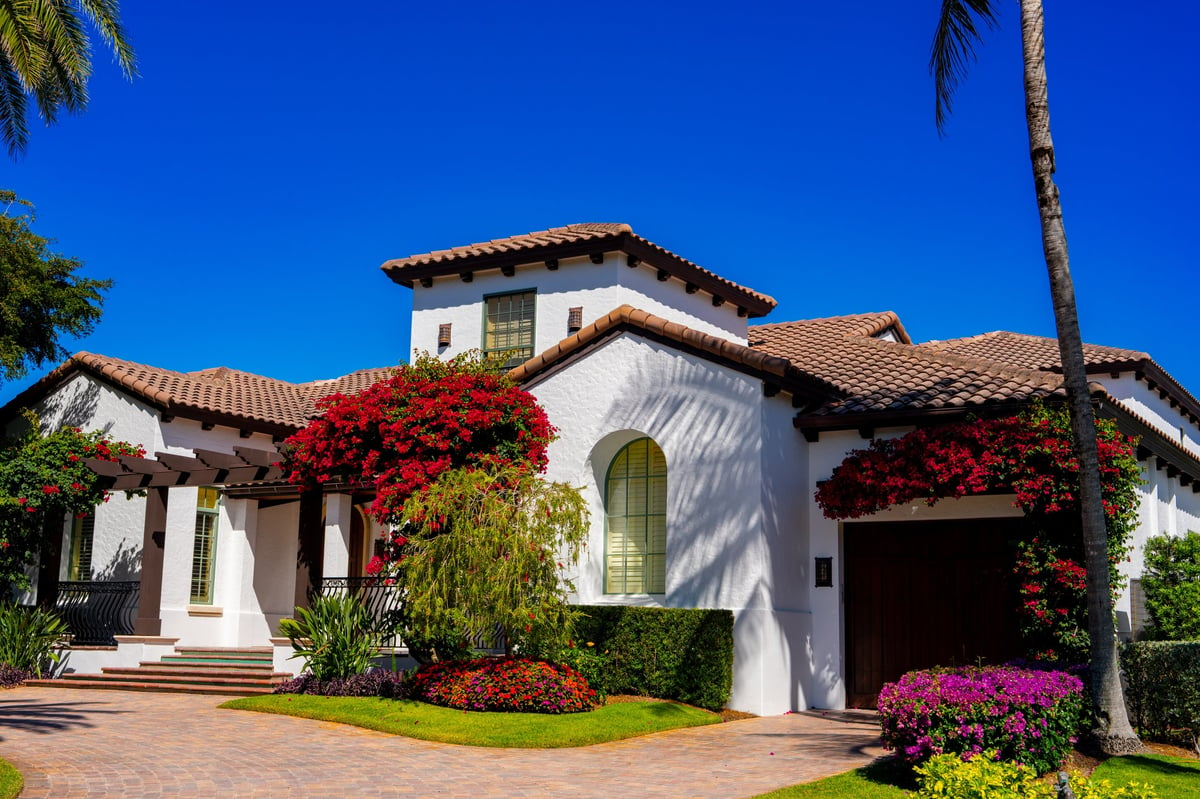
A detailed, photo-documented inspection that tells you exactly what's happening on your roof — not a five-minute walk-around and a sales pitch. Monument Roofing is a residential Arizona roofing company. We evaluate your tile roof's underlayment, check for leaks, assess overall condition, and help you decide whether a section repair or full underlayment replacement makes more sense. Serving Chandler, Gilbert, Scottsdale, and the surrounding Valley.
Most Arizona homeowners only think about their roof when water shows up where it shouldn't. But by the time a leak appears on your ceiling, the underlayment — the waterproof layer beneath your tile — has usually been failing for months or years.
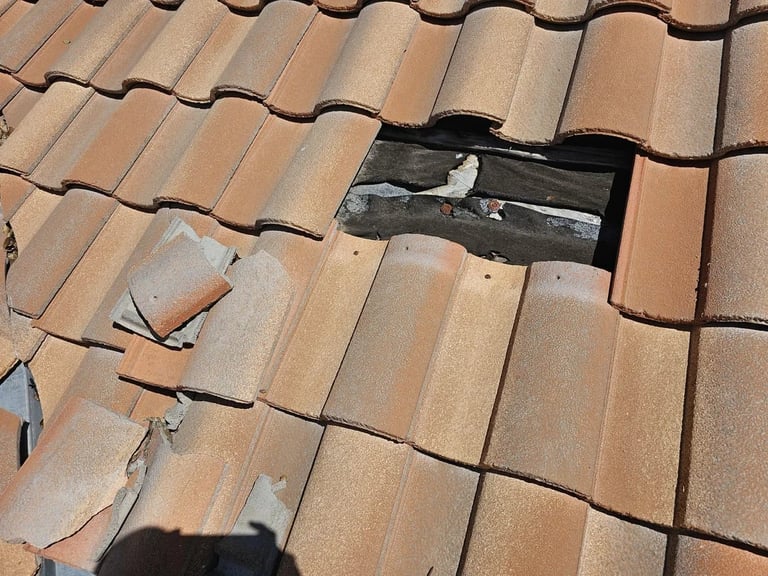
Monument Roofing's inspections are designed to evaluate what matters most on an Arizona tile roof: the condition of the underlayment beneath the tile. We don't just look at the tile from a ladder and call it good. We get on the roof, lift tiles in key areas, check the underlayment directly, and document what we find with photos.
The result is a clear picture of your roof's actual condition — so you can make an informed decision about whether you need a section repair, full underlayment replacement, or if your roof is in good shape and just needs monitoring.
Our inspections are built to answer the questions Arizona homeowners actually have: Is my underlayment still doing its job? Is this leak a one-section problem or a whole-roof problem? Does my roof need work now, or can it wait?
An inspection is the most reliable way to understand your roof's condition. Here are the situations where scheduling one makes the most sense.
Water showing up inside your home is the most obvious sign. An inspection locates the source — which isn't always directly above the stain — and determines whether it's a localized problem or part of a broader issue.
If leaks keep coming back after repairs — or if new leaks appear in different areas — the underlayment system as a whole may be failing. An inspection helps determine whether section repairs can still work or whether full underlayment replacement is the smarter path.
A general home inspection flags that the roof exists — but it doesn't evaluate underlayment condition specifically. A specialized tile roof inspection gives buyers confidence and helps sellers address real issues before they become negotiation points.
On Arizona homes, tile roof underlayment typically lasts 20–25 years — sometimes less depending on exposure and material quality. If your roof is 15+ years old with original underlayment, an inspection gives you a baseline before problems start.
This is one of the most common reasons homeowners call us. An inspection gives you the evidence — photos of your actual underlayment — so you can make a confident decision rather than guessing.
Our inspections are thorough and systematic. Here's what we check — and why each item matters.
Cracked, broken, shifted, or missing tiles. While tile issues alone rarely cause leaks, they can expose underlayment to more direct weather stress and indicate areas that need closer inspection.
We lift tiles in multiple locations to check the underlayment directly. Brittle, torn, or deteriorated underlayment is a clear sign the waterproofing layer is failing — even if you haven't seen a leak yet.
Valleys, pipe jacks, chimney flashing, wall-to-roof transitions, and skylight curbs. These are where most leaks start, and we inspect them closely for signs of water intrusion.
Are we seeing one compromised section with sound underlayment elsewhere? Or are we finding deterioration across multiple roof planes? This is the key distinction between a repair candidate and a full replacement candidate.
Where underlayment has failed, we look for signs that water has reached the deck. Soft spots, staining, or visible rot on exposed decking tells us repair scope may need to include deck replacement.
We consider the roof's age, the quality of the original installation, how much life the tile has left, and the condition of flashings and battens — giving you a complete picture, not just a leak report.
One of the most valuable outcomes of an inspection is clarity on whether your roof needs a targeted repair or a more comprehensive approach. Here's how the inspection guides that decision.
You'll see the evidence yourself. We take photos throughout the inspection so you can see what we see — no guessing, no trusting someone's word alone.
Arizona's climate creates a unique set of stresses on tile roofs — and by extension, a unique case for regular professional inspections.
300+ days of sun per year. Summer temperatures above 110°. The underlayment beneath your tile bakes in these conditions — slowly drying out, losing flexibility, and becoming brittle over 15–25 years.
Desert days and nights can vary by 30° or more. Materials expand and contract with every cycle. Over years, this thermal movement can tear underlayment at fastener points and separate flashing at transitions.
Intense, wind-driven monsoon rain exploits every weak point in an aging underlayment system. Leaks that seem to appear suddenly after a storm are often the result of years of gradual deterioration finally reaching a breaking point.
Tile can look perfectly fine from the ground while the underlayment beneath it is compromised. An inspection is the only way to check what's happening underneath before interior damage makes the problem obvious — and more expensive.
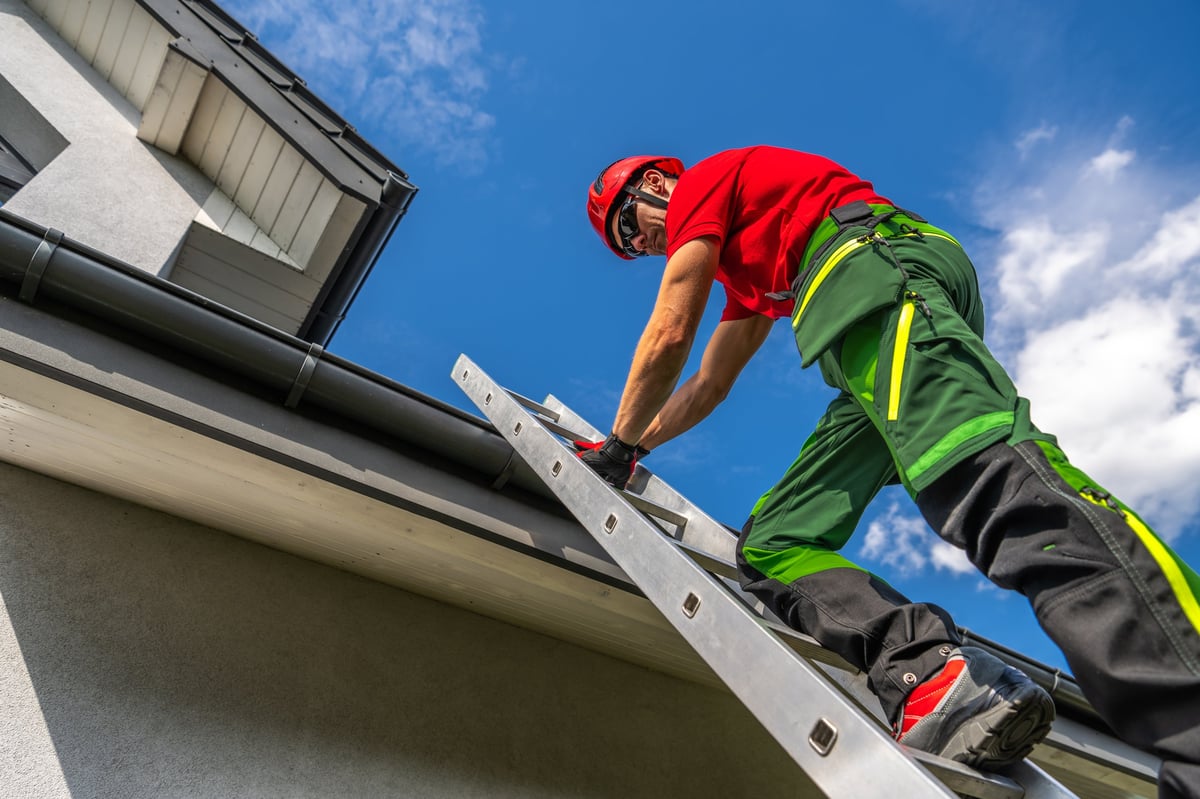
Whether you're dealing with a leak, planning ahead for an aging roof, or just want to know where your roof stands, a professional inspection gives you the answers. We serve homeowners in Chandler, Gilbert, Scottsdale, and throughout the surrounding Valley.
Chandler · Gilbert · Scottsdale · and the surrounding Valley